Credit Card Minimum Payment Trap & Debt Settlement Solution

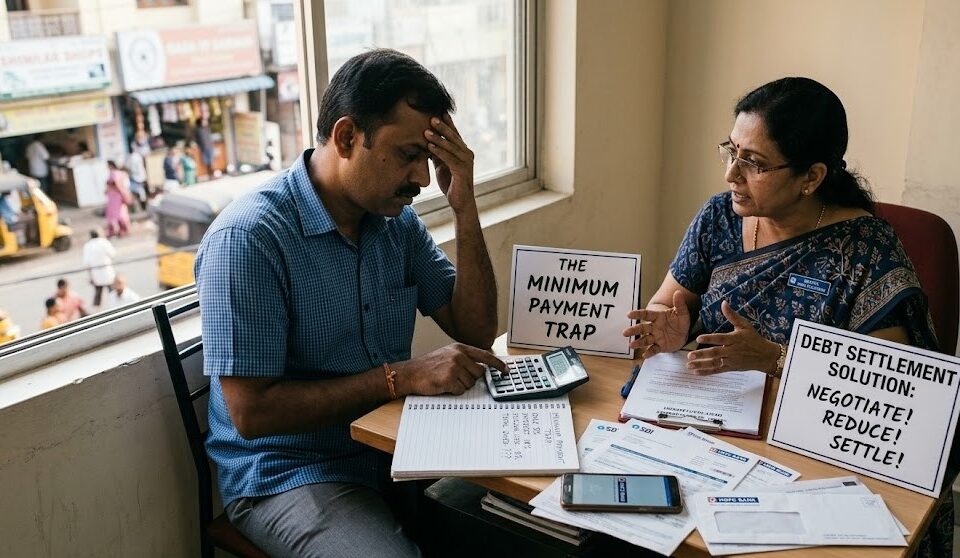
For many credit card users, the “Minimum Amount Due” is a comforting phrase. It suggests that by paying just 5% of your balance, you are staying on top of your bills and keeping your credit score intact. However, in reality, this is the beginning of a sophisticated credit card debt trap. While the minimum payment keeps the bank from marking you as a “defaulter” today, it ensures that you remain a debtor for decades.
At Legal Settle, we see thousands of borrowers who have paid the minimum amount for years, only to find that their total outstanding balance has actually increased. If you find yourself in this cycle, it is time to stop playing by the bank’s rules and seek professional debt settlement help.
How the Minimum Payment Trap Works
The math behind credit cards is designed to favor the lender. When you pay only the minimum amount, the bank applies that money first to the taxes (GST), then to the high-interest charges (which can be as high as 42% per annum), and finally to the late fees. Almost none of your payment goes toward the actual “principal” amount you spent.
This creates a credit card debt trap where you are essentially paying “rent” on the money you borrowed, without ever actually owning the money back. If you have a balance of ₹1,00,000 and only pay the minimum, it could take you over 20 years to clear the debt, and you would end up paying back nearly five times the original amount.
The Mental and Financial Toll
The stress of the credit card debt trap is cumulative. At first, it feels manageable. But as the balance grows, the interest starts to compound daily. Eventually, your credit limit is reached, your card is blocked, and the very same bank that encouraged “minimum payments” begins to send aggressive recovery agents to your door.
This is the point where most people realize they need a way out. Continuing to pay the minimum is no longer an option when you can’t afford basic living expenses. This is where seeking debt settlement help becomes the only logical financial decision.
Settlement: The Practical Exit Strategy
A credit card settlement is a negotiated agreement where the bank agrees to accept a one-time lump sum payment to close the account forever. This payment is typically 30% to 50% of your total outstanding balance.
By choosing a settlement, you achieve what years of minimum payments couldn’t:
- Principal Haircut: You finally pay back a fixed amount that includes a reduction in the original principal.
- Interest Freeze: The moment you enter a settlement negotiation, the daily compounding interest stops.
- Legal Immunity: Once you pay the settled amount and receive a “No Dues Certificate,” the bank has no legal right to pursue you for that debt again.
While this process does leave a “Settled” remark on your CIBIL report, it is the most effective way to gain immediate debt settlement help and stop the financial bleeding.
Why You Need Professional Guidance
Negotiating with credit card companies is not easy. They are trained to push you back into the credit card debt trap by offering “restructured EMIs” or “balance transfers,” which often just prolong the agony.
When you work with experts at Legal Settle, we handle the tough conversations for you. We understand the bank’s internal waiver policies and can spot the difference between a genuine settlement offer and a recovery tactic. We ensure that your settlement is documented correctly, protecting you from future legal hurdles.
Rebuilding After the Trap
Once you are free from the credit card debt trap, your priority should be credit repair. The money you used to “waste” on minimum payments can now be saved or used to build a Fixed Deposit, which can serve as collateral for a secured credit card. Over time, this disciplined approach will heal your credit score and ensure you never fall into the interest trap again.
Conclusion
The “Minimum Amount Due” is a trap, but it isn’t a life sentence. You can choose to break the cycle today by opting for a professional debt settlement help strategy. Reclaiming your financial freedom starts with admitting that the current system isn’t working for you and taking the legal steps to settle your dues once and for all.