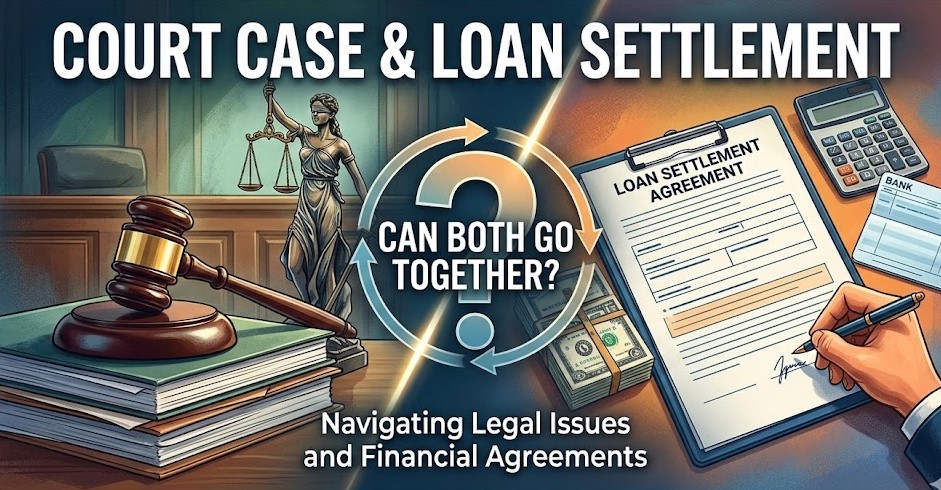

Many borrowers believe that once a loan court case is filed, the opportunity for Loan Settlement is completely closed. This is a common misunderstanding. In reality, Loan Settlement and legal debt settlement discussions can continue even after a case has been initiated in court. Filing a case is often a recovery step taken by lenders to secure their claim, but it does not always eliminate the possibility of negotiation.
Understanding how court proceedings and debt Settlement interact can help borrowers take informed and timely decisions.
Why Do Lenders File a Loan Court Case?
When repeated reminders, recovery calls, and legal notices fail, lenders may file a loan court case to recover the outstanding amount legally. This step is generally taken when the borrower has been in prolonged default.
- Recovery Protection: The lender wants to legally protect its financial claim.
- Pressure Mechanism: Court action encourages borrowers to respond seriously.
- Time-Sensitive Recovery: Filing a case prevents limitation issues and strengthens the lender’s legal position.
However, initiating a case does not mean the lender is unwilling to consider Loan Settlement. In many situations, lenders still prefer negotiated recovery over lengthy litigation.
Can Loan Settlement Continue During a Court Case?
Yes, Loan Settlement can go hand in hand with a loan court case. Courts often encourage mutual settlement between parties to reduce prolonged disputes. If both borrower and lender agree on terms, the matter can be resolved through legal debt settlement, and the case may be withdrawn or closed based on the settlement agreement.
- Mutual Agreement: Both parties must voluntarily agree on the settlement amount.
- Written Terms: Settlement conditions are usually documented to avoid future disputes.
- Court Closure: Once payment is made as per agreement, the case can be formally disposed of.
This process helps borrowers avoid extended litigation costs and additional stress.
Advantages of Settling During Legal Proceedings
Choosing Loan Settlement even after a loan court case has started can offer several practical benefits.
- Cost Control: Legal proceedings can involve lawyer fees, court expenses, and added interest. Settlement reduces these risks.
- Time Efficiency: Court cases may take months or even years. Legal debt settlement provides quicker resolution.
- Reduced Financial Burden: A negotiated settlement amount is often lower than the total claim, making closure manageable.
For borrowers facing genuine hardship, debt Settlement during litigation can be a structured and realistic solution.
Important Precautions
While pursuing Loan Settlement during a loan court case, borrowers must act carefully.
- Do Not Ignore Court Summons: Failing to appear can result in ex-parte orders.
- Maintain Documentation: Keep all written communication and settlement offers recorded.
- Avoid Informal Agreements: Always ensure that settlement terms are legally documented.
Professional guidance can help ensure that the legal debt settlement is structured properly and recognized by the court.
Final Conclusion
A loan court case does not eliminate the possibility of Loan Settlement. In fact, many disputes are resolved through negotiation even after legal proceedings begin. Loan Settlement and legal debt settlement can work together to provide a faster and financially practical resolution.
With timely action, proper documentation, and structured negotiation, borrowers can settle their debts legally while minimizing long-term financial and legal risks.