
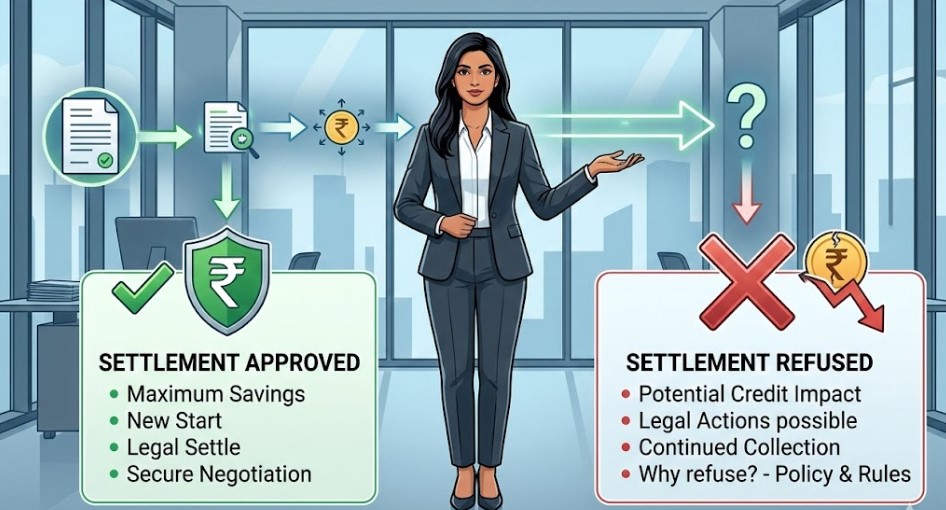

When borrowers struggle with repayments and apply for Loan Settlement, they often assume the bank will automatically agree. However, a bank loan settlement refusal is possible because settlement is a negotiated agreement, not a guaranteed approval. Loan Settlement and debt Settlement depend on the lender’s internal policies, financial evaluation, and the borrower’s hardship situation.
Understanding why refusals happen and how to respond strategically can improve your chances of eventual approval.
Why Do Banks Refuse Loan Settlement?
Banks evaluate multiple factors before approving settlement. A bank loan settlement refusal usually happens due to the following reasons:
- Stable Income Evidence: If the lender believes the borrower still has sufficient repayment capacity, they may reject the settlement request and insist on regular EMIs.
- Early Stage of Default: When only one or two EMIs are overdue, banks may prefer restructuring instead of Loan Settlement.
- Incomplete Documentation: Lack of proper hardship proof, income details, or financial statements weakens the case.
- Unrealistic Settlement Offer: If the proposed amount is too low without justification, lenders may decline the request.
In such cases, refusal does not mean the bank will never consider debt Settlement again; it simply means the proposal needs improvement.
What Should You Do After Refusal?
A bank loan settlement refusal should not lead to panic or avoidance. Instead, borrowers should focus on strengthening their approach.
- Review Financial Documents: Ensure that income proofs, job loss letters, medical records, or business loss documents are properly arranged.
- Reassess the Offer: A realistic and practical repayment proposal increases credibility.
- Maintain Communication: Avoid ignoring calls or notices after rejection, as this can escalate the matter.
Loan Settlement often involves multiple rounds of negotiation. A revised and well-prepared proposal can change the outcome.
Does Timing Matter?
Yes, timing plays a crucial role in Loan Settlement. Accounts that remain unpaid for a longer duration may eventually become more suitable for debt Settlement discussions because lenders aim to recover part of the outstanding amount rather than pursuing prolonged recovery action.
However, delaying communication intentionally is not advisable. A structured strategy is more effective than passive waiting.
Alternative Options If Settlement Is Rejected
If a bank loan settlement refusal continues, borrowers can consider temporary alternatives such as:
- EMI restructuring or reduced installment plans
- Moratorium options in specific hardship cases
- Extended tenure to lower monthly burden
These solutions may not eliminate the debt but can provide temporary relief until financial stability improves.
Final Thoughts
Yes, banks can refuse Loan Settlement requests, and a bank loan settlement refusal is part of the negotiation process in some cases. However, rejection does not close the door permanently. With better documentation, realistic proposals, and a structured debt Settlement strategy, approval chances can improve significantly.
Loan Settlement and debt Settlement require patience, financial clarity, and professional communication. Instead of viewing refusal as failure, treat it as a step toward building a stronger case for resolution.